Last reviewed:
That last one is the one people miss. A ground-level photo shows the front of a house. An aerial frame shows the whole lot at once, including the parts nobody has looked at since spring.
This checklist is an educational resource for property photography. For Pete’s selected artistic work, explore place commissions.
Outside, from the road
- Move the cars. Off the driveway, off the street in front, and out of the garage if the garage is being shot. This is the single biggest difference between a driveway that looks generous and one that looks tight.
- Bins out of sight, and check the collection day against the shoot date before you book.
- Coil the hoses, put the tools away, and take down anything seasonal that is off-season by a month or more.
- Patio furniture set up, not stacked. A covered stack reads as a house closing up for the year. If it is genuinely winter, empty is better than covered.
- In winter, clear the driveway and walk to their real edges. A path shovelled to half its width photographs as a driveway half its width, and a snowbank pushed onto the lawn removes the lawn from the picture.
Outside, from the air
This is the half of the shoot almost nobody prepares for, and on a property where the land is the selling point it is most of what the buyer looks at.
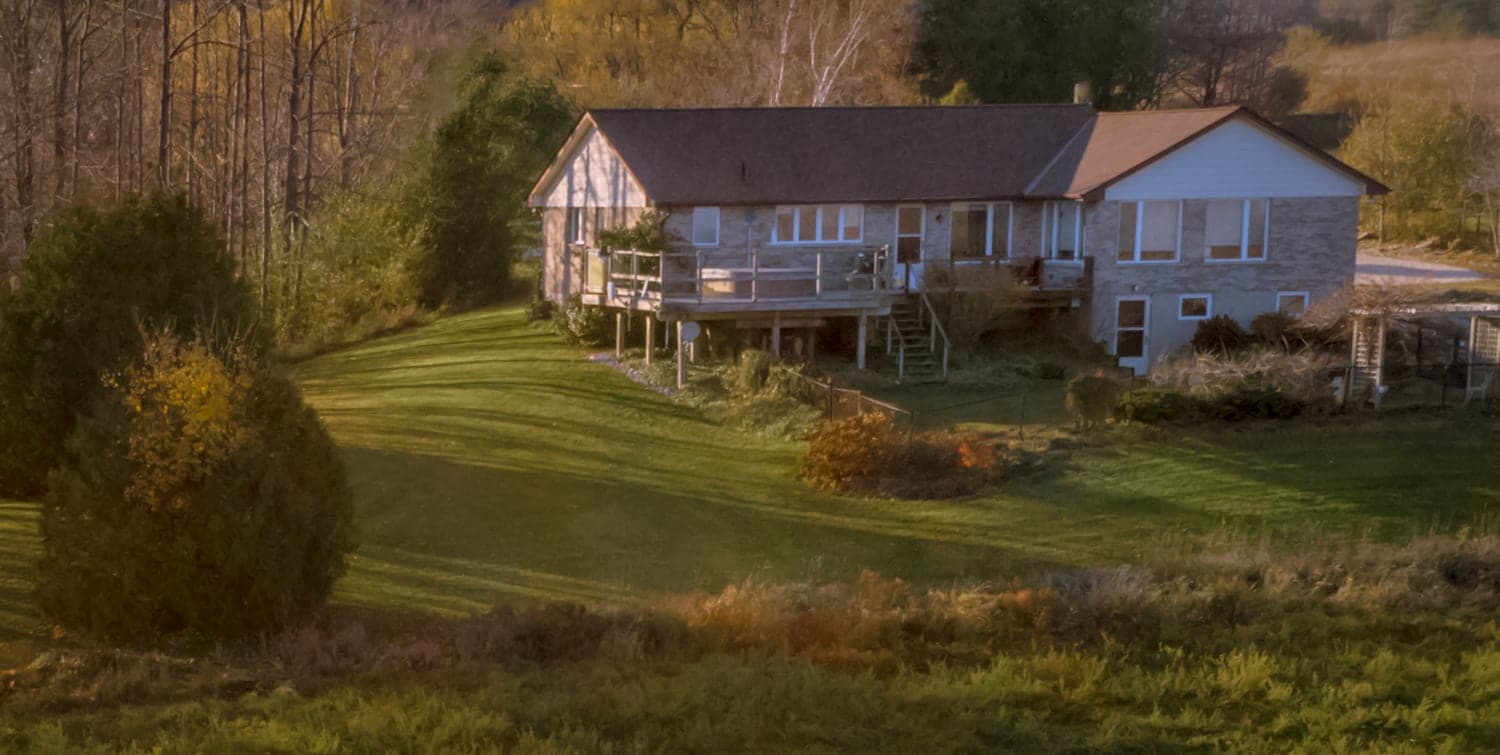
- The roof. Moss, leaves sitting in the valleys, a satellite dish nobody has used in a decade. All invisible from the driveway, all obvious from above.
- Blue tarps. Whatever is under it, a tarp reads as a problem from the air. Move it or uncover it.
- The side-yard collection. Boat, trailer, quad, snowmobile, woodpile, the second fridge. Hidden from the sidewalk, unmissable from two hundred feet.
- Trampolines, above-ground pools and pool covers. A cover with water pooled on it is the worst of them.
- Mow the whole visible parcel, not just the part a visitor walks past. Aerial frames show mowing lines, so a lawn cut in one direction in one pass looks far better than a patchwork of two cuts a week apart.
- On the water: dock in and clear, boat lift set the way you want it seen, weed and debris pulled off the shoreline edge.
- On acreage: gates closed, equipment parked together in one spot rather than scattered, drums and feed bags out of the yard. A tidy farmyard from the air says the property has been looked after. Nothing else says it as quickly.
Inside
- Every bulb working, and matching within a room. A warm bulb next to a cool one in the same fixture can only be corrected so far.
- Counters down to one or two things. Kettle and a bowl of fruit, not the whole appliance shelf. Clear the fridge front completely.
- Bathrooms: seats down, mats straight, matching towels, and everything personal off the counter.
- Blinds all set to the same height in every room, and preferably all the way up.
- Put away what publishes badly. Family photos, mail, prescriptions and paperwork all read at full resolution once the gallery is online, and so does anything worth stealing.
- Pets out of the house for the visit, along with bowls, beds and the litter box.
What you cannot fix in an hour
Construction next door. A neighbour's derelict trailer. A dead August lawn. A roof due for replacement. These get composed around rather than removed, using angle, altitude and the time of day, and that works better than people expect.
Say so when you book rather than letting the shoot discover it. A property with a known problem on one side gets a plan. A property where the problem turns up on arrival gets whatever the remaining light allows.
Property photographs should represent permanent features accurately. Discuss editing expectations with the photographer before the shoot.
Light and season
Tell your photographer which way the front of the house faces. It decides the hour more than anything else does, and a west-facing front photographed at nine in the morning is a flat grey wall no matter what else went right.
Season matters more here than in most markets, because the setting is a large part of what the buyer is paying for.
- Winter is an asset on the escarpment. Snow on the hills behind a Blue Mountains chalet or on the orchards above Thornbury is the picture, not an obstacle to it.
- Summer is the whole argument on the shoreline. A Wasaga Beach beachfront listing or a Collingwood waterfront property photographed in February is being sold with its main feature switched off. If the timing can move, move it.
- Late March and April can be difficult. Grey grass and bare trees change the appearance of a property. Discuss the strongest viewpoints with your photographer and whether a later visit would be useful.
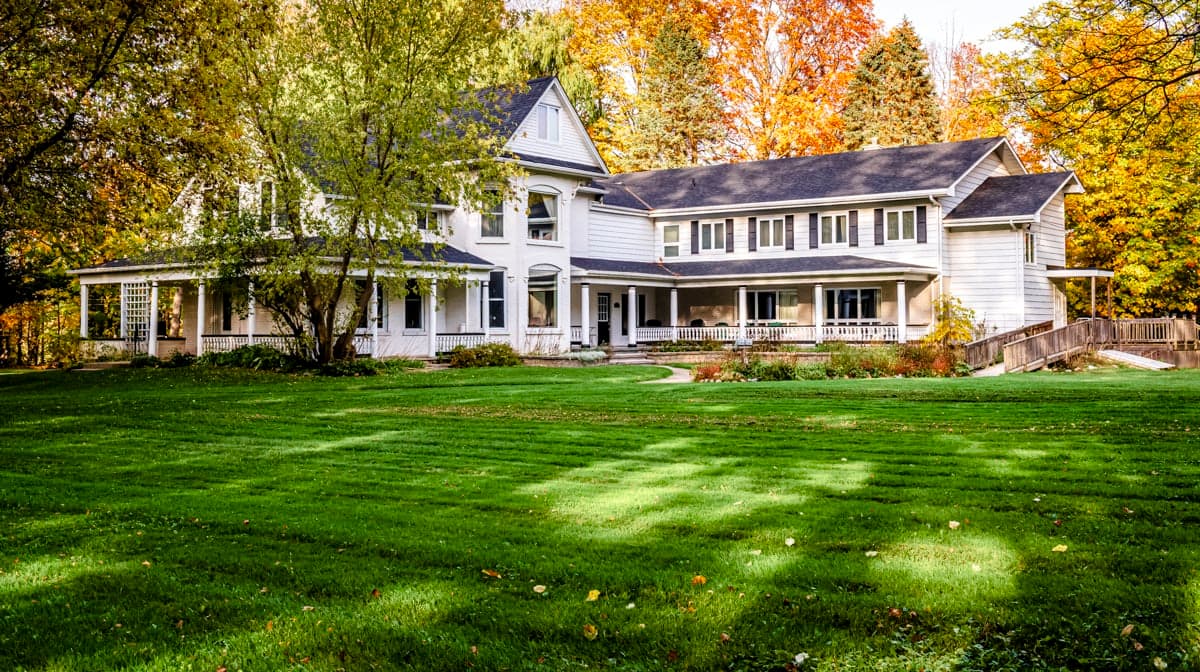
- Fall colour in the Beaver Valley changes quickly. Discuss timing with your photographer early if autumn foliage is important to the photographs.
What to discuss with your photographer
- The property address and when you need the finished photographs
- Which way the front faces
- Access: who will meet the photographer and how entry will be arranged
- Pets, gates or other access arrangements; share sensitive access details through an agreed secure channel
- Anything unusual you want covered: acreage boundaries, a shared driveway, water frontage, or a property close to an airport, where the drone rules change what can be flown